History & Neighborhood
A New York City–designated landmark in the Carnegie Hill Historic District, built in 1916 for Edith and Ernesto Fabbri.
History of the House
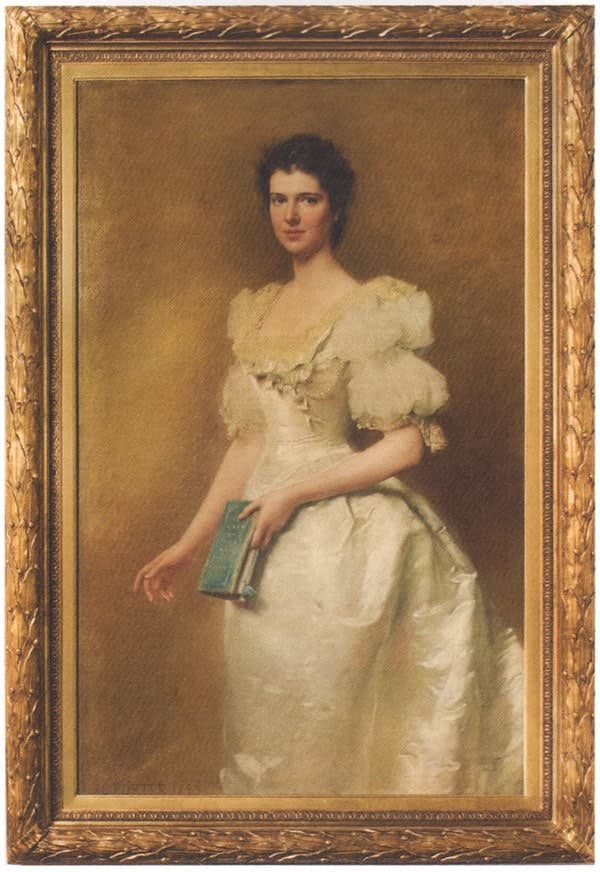
The House at 7 East 95th Street was built between 1914 and 1916 to serve as the town residence of Edith Shepard Fabbri, a great-granddaughter of Commodore Cornelius Vanderbilt, and her husband, Ernesto Fabbri, an associate of J. Pierpont Morgan. The house was designed by Grosvenor Atterbury, an American architect and town planner trained at the École des Beaux-Arts in Paris, noted for the 1908 restoration of New York's City Hall. The interior decoration, however, was executed by Egisto Fabbri, Ernesto's brother, who incorporated Edith Fabbri's collection of Italian Renaissance and Baroque furnishings and architectural fragments into his designs.
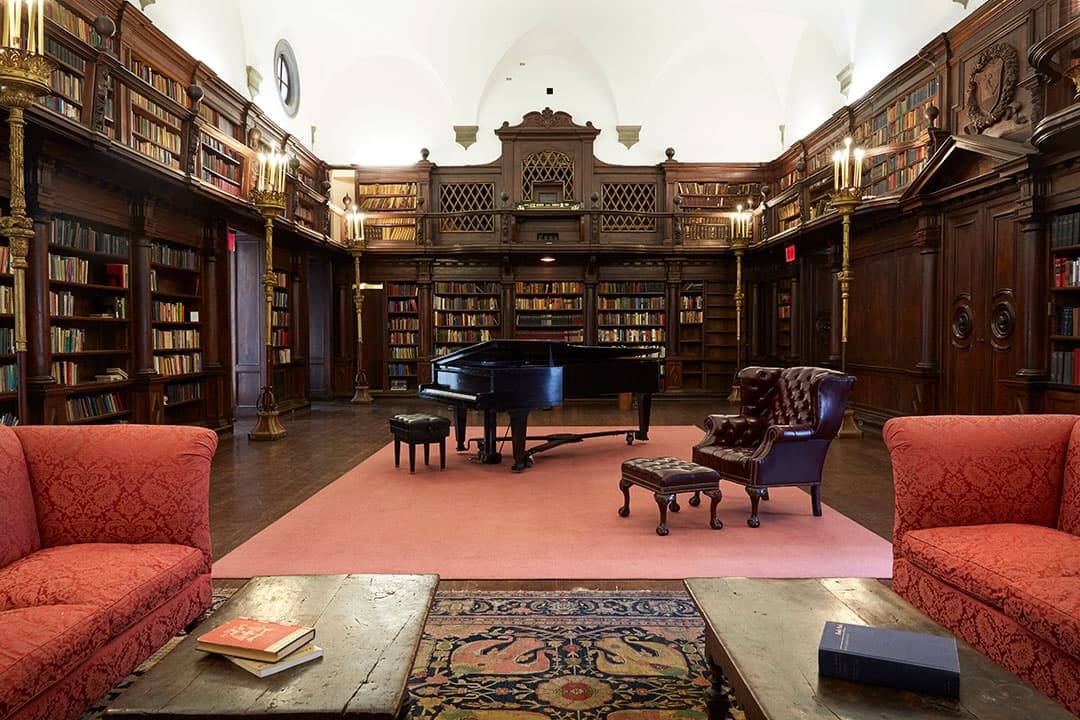
The House of the Redeemer's outstanding architectural feature is the library, a treasure built in the 1600s for a ducal palace on the outskirts of Urbino, Italy. The library boasts a beautifully painted coat of arms, dated 1605–1609, on the vaulted 25-foot-high ceiling. There is a monumental fireplace, exquisite paneling, a balustrade gallery, and even a secret passageway.
Egisto Fabbri, well versed in the historic aspects of Italian architecture, helped design and decorate the House when it was built. Whole sections of original wood ceilings and the wood paneling of the historic library were transported in two ships from Italy through U-boat-infested waters during World War I, and the house was designed and constructed to contain them.
The house is L-shaped to accommodate the library in one wing and to produce a courtyard and an adjoining but now-lost garden. Entry to the house is through tall oak doors. Inner marble steps lead to a second set of wrought-iron doors which open into the entrance hall. The design and position of the grand stone stairway, the earth-tone tile floors, and the patina on the wood tables and benches offer an astonishing sense of space, security, and simplicity. To the right lies a reception room with a coffered ceiling, and here hangs the portrait of Mrs. Fabbri. Opposite is the dining room, with a vaulted ceiling, stone fireplace, and space to seat eighty guests comfortably. The chapel on the second floor has another example of a coffered ceiling and leaded windows given in 1985 as a memorial.
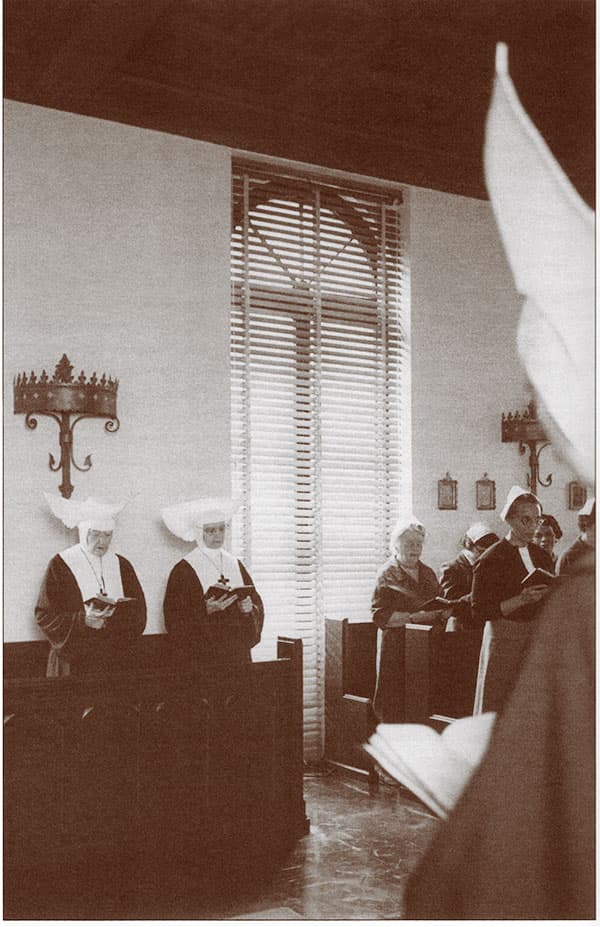
In 1949, inspired by a sermon preached by the Rt. Rev. Austin Pardue on the necessity of silence and prayer in the spiritual life, Edith Fabbri deeded the building to a board of trustees under the auspices of the Episcopal Church to be used as a religious retreat house under the name House of the Redeemer. A new corporation by that name was formed to receive the gift of her house and administer it as a "place apart." The Rt. Rev. Charles K. Gilbert, Bishop of New York, was the first president of the board of trustees. A year later, Bishop Horace W. B. Donegan succeeded him and remained president until his death in 1991.
The house was operated by Episcopal nuns — the Sisters of St. Mary — from 1949 until 1980, when the first residential Warden was appointed to oversee the House's daily life. It was designated a New York City Landmark in 1974 and is now considered one of the finest examples of early twentieth-century residential architecture in the city.
Today, the House is guided by a Board of Trustees, with Episcopal priests-in-residence providing spiritual care. Daily operations are overseen by the House Manager and staff. Board Member Percy Preston Jr.'s book A Place Apart is available for purchase at the House.
Carnegie Hill Neighborhood
Located in the historic Carnegie Hill District on the Upper East Side of Manhattan, the House is on "Museum Mile," within walking distance of major museums, cultural institutions, and near Central Park.
Churches, Synagogues, Mosques, and Temples
Within this serene neighborhood, the House of the Redeemer continues to offer its mission of quiet hospitality — a "place apart" where heritage, faith, and the rhythms of city life meet.